_edited.png)
Privacy-First Lead Generation: Adapting to Cookieless Tracking in 2025 for Sales Success

The digital marketing and sales landscape is evolving rapidly. With third-party cookies being phased out, traditional tracking methods are no longer reliable. Businesses that rely on outdated lead generation techniques risk losing engagement, conversions, and ultimately revenue.
The solution? Cookieless tracking combined with privacy-first lead generation. By focusing on first-party data, transparency, and consent, sales teams can continue to attract, nurture, and convert leads effectively—while complying with privacy regulations.
This blog explains everything sales teams need to know about cookieless tracking, practical steps to implement it, tools to use, and strategies to optimize lead generation in 2025.
What is Cookieless Tracking?
Cookieless tracking is a method of tracking user behavior without relying on third-party cookies.
Why it matters:
Third-party cookies track users across websites, often without their knowledge.
Privacy regulations like GDPR and CCPA require explicit consent for personal data collection.
Browsers like Safari, Firefox, and soon Chrome, limit or block third-party cookies.
Why it matters:
First-party data collection – Capturing data directly from users (forms, sign-ups, purchases).
Contextual marketing – Delivering ads and CTAs based on content engagement rather than previous browsing.
Privacy-focused tools – Platforms like Google Privacy Sandbox, Salespanel, HubSpot CRM, or GA4 that enable tracking without third-party cookies.
Sales example: A lead downloads a sales e-book. With cookieless tracking, the sales team knows exactly which content the lead engaged with and can follow up directly—without tracking them elsewhere online.
Why Privacy-First Lead Generation with Cookieless Tracking Matters
Sales teams need to focus on quality over quantity. Privacy-first lead generation ensures:
Customer Trust – Leads are more likely to engage with businesses that handle their data responsibly.
Higher-Quality Leads – First-party and consent-based data means your team works with genuinely interested prospects.
Increased Conversions – Engaged leads are closer to buying, shortening the sales funnel.
Regulatory Compliance – Avoid legal issues and protect your brand reputation.
Example: A SaaS company using privacy-first lead generation for webinar sign-ups saw a 30% increase in demo requests, showing how trust and consent improve lead quality.
6 Steps to Cookieless Tracking for Privacy-First Lead Generation
Cookieless tracking helps sales teams collect leads ethically and effectively. By focusing on first-party data, privacy-compliant tools, contextual marketing, consent, AI-driven lead scoring, and sales metrics, businesses can generate high-quality leads while respecting user privacy and improving conversion rates.
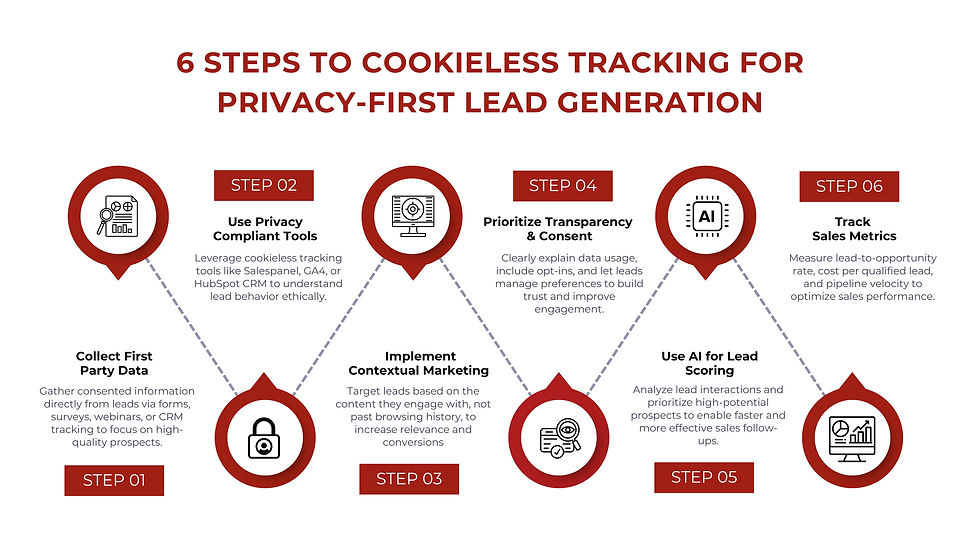
Step 1: Collect First-Party Data
First-party data is the foundation of privacy-first lead generation and cookieless tracking.
Sources of first-party data:
Website forms – Newsletter sign-ups, free downloads, demo requests
Surveys and polls – Gain insights into customer preferences
Webinars and free trials – Capture emails and other details with consent
CRM tracking – Record direct interactions with your sales team
Step-by-step example:
Offer a free sales toolkit on a landing page.
Ask for name, email, and company size.
Include a consent checkbox for communications.
Sync data with CRM for personalized sales follow-up.
By collecting first-party data ethically, sales teams can focus on leads who are genuinely interested, improving conversions.
Step 2: Use Privacy-Compliant Tracking Tools
Without third-party cookies, you need privacy-friendly tracking tools to understand lead behavior:
Server-side tracking – Data collected directly from your own servers.
Tools for cookieless tracking:
Salespanel – Deep tracking across domains, first-party focused
Google Analytics 4 – Event-based insights, predictive analytics
HubSpot CRM – Consent-based data collection and segmentation
Example: A lead downloads a guide and attends a webinar. With cookieless tracking tools, your sales team knows which content they engaged with and can follow up without violating privacy regulations.
Step 3: Implement Contextual Marketing
Contextual marketing targets users based on content engagement, not past browsing history.
How sales teams can apply this:
Add CTAs to relevant blog posts or landing pages.
Send follow-up emails aligned with the content a lead interacted with.
Customize landing pages for different industries or products.
Example: A lead reads a blog on sales automation. Offer a webinar on workflow optimization to increase engagement and conversion.
Step 4: Prioritize Transparency and Consent
Transparency is crucial in building trust:
Clearly explain what data you collect and why.
Include opt-in checkboxes for marketing communications.
Allow leads to manage their preferences or unsubscribe.
Example:
"We respect your privacy. Your information will only be used for product updates and personalized support. You can unsubscribe at any time."
This approach increases form submissions and ensures high-quality leads.
Step 5: Use AI for Lead Scoring
AI can help sales teams prioritize high-potential leads using cookieless tracking data:
Analyze interactions: form submissions, webinar attendance, downloads.
Score leads by likelihood to convert.
Assign sales reps to follow up with top leads immediately.
Example:
A lead attending a webinar, downloading a guide, and visiting pricing pages gets a high score. The sales rep contacts them quickly, increasing conversion probability.
Step 6: Track Sales Metrics
Outcome-based metrics matter more than traditional web tracking:
Lead-to-Opportunity Rate – % of leads turning into qualified opportunities
Cost per Qualified Lead – Efficiency of generating ready-to-buy leads
Pipeline Velocity – How fast leads move through the funnel
Example: 100 leads from a cookieless campaign produce 25 opportunities → Lead-to-Opportunity Rate = 25%.
Tools for Cookieless Tracking and Sales
Salespanel – Deep tracking, cross-domain insights, first-party data
Google Analytics 4 – Event-based, privacy-first analytics, predictive insights
HubSpot CRM – Consent-based data collection, segmentation, campaign integration
LiveRamp – Connects first-party data across channels for targeted marketing
Permutive – Contextual advertising and privacy-compliant first-party data activation
Strategies to Maximize Sales with Cookieless Tracking
Gather Zero- and First-Party Data – Collect explicit information directly from leads through forms, surveys, and CRM interactions.
Leverage Contextual Advertising – Target leads based on the content they engage with for higher relevance.
Invest in Privacy Sandbox Initiatives – Use tools like Google Privacy Sandbox for interest-based targeting without cookies.
Email Marketing – Segment and automate campaigns based on first-party data, building personalized engagement.
Social Proof Campaigns – Use testimonials and case studies to build trust and credibility.
Conclusion
Cookieless tracking is essential for sales success in 2025. By combining privacy-first lead generation with:
First-party data collection
Contextual marketing
AI-powered lead scoring
Transparent consent practices
Sales teams can generate high-quality leads, increase conversions, build trust, and comply with privacy regulations.
The future is cookieless, and sales success depends on adopting these strategies today. Companies that embrace cookieless tracking will enjoy stronger pipelines, better engagement, and sustainable growth.
Ready to supercharge your sales with cookieless tracking? Start implementing these strategies now and stay ahead in 2025!
Frequently Asked Questions (FAQs)
What is cookieless tracking and why is it important for sales in 2025?
Cookieless tracking is a method of tracking user interactions without third-party cookies. In 2025, with stricter privacy regulations and the phase-out of cookies, it ensures sales teams can still collect high-quality first-party data, follow leads accurately, and maintain trust while staying compliant.
How does privacy-first lead generation differ from traditional methods?
Privacy-first lead generation relies on first-party data and user consent, rather than tracking users across multiple websites. This approach builds trust, ensures compliance, and delivers higher-quality leads for sales teams.
Can small businesses implement cookieless tracking effectively?
Yes. Small businesses can use tools like Google Analytics 4, HubSpot CRM, or Salespanel to track interactions ethically and collect first-party data without the need for third-party cookies.
How does cookieless tracking improve lead quality?
By collecting consent-based first-party data, sales teams focus on leads who have actively engaged with your brand. This results in more qualified leads, better conversion rates, and faster sales cycles
What are the best tools for privacy-first lead generation?
Some popular tools include:
Salespanel – Deep tracking across domains
Google Analytics 4 – Privacy-focused analytics
HubSpot CRM – Consent-based data management
LiveRamp & Permutive – Contextual and first-party data solutions
Will cookieless tracking replace all traditional tracking methods by 2025?
While cookieless tracking will become the standard, some businesses may still use limited first-party cookies for analytics. By 2025, most sales and marketing teams will rely heavily on first-party data, contextual marketing, and privacy-compliant tools to drive lead generation and conversions.

Comments